OvO Game

Stone Grass: Mowing Simulator

Farting Flight

Real Drift World

Super Liquid Soccer

A Small World Cup 2
CloverPit
CloverPit

Train 8: Anomalous Route

Granny: Fnaf Hospital

Kindergarten 2

How to date a Sleep Paralysis Demon

Sprunki Kick the Buddy but with WENDA

Sprunki Wenda Treatment 4.0

Slendytubbies

Slendytubbies 2

Slendytubbies 3

Wobbly Pets

Tube Fight

Five Nights With Voxels

School Fury

Retro Sports Champion

World Soccer Physics

Roper

Beast Clash

Super Star Car

EmberWars.io

Bowmasters

Sunset Bike Racer

Stunt Paradise

Rotate Rush

Soyjak Siege

Escape Animals

StealNow.io

LavaRun.io
Stick Hero RPG


CloverPit
CloverPit
RECOMMENDED FOR YOU
OvO Game
Stone Grass: Mowing Simulator
Farting Flight
Real Drift World
Super Liquid Soccer
A Small World Cup 2
Train 8: Anomalous Route
Granny: Fnaf Hospital
Kindergarten 2
How to date a Sleep Paralysis Demon
Sprunki Kick the Buddy but with WENDA
Sprunki Wenda Treatment 4.0
Slendytubbies
Slendytubbies 2
Slendytubbies 3
Wobbly Pets
Tube Fight
Five Nights With Voxels
School Fury
Retro Sports Champion
CloverPit
Not Just Another Slot Machine
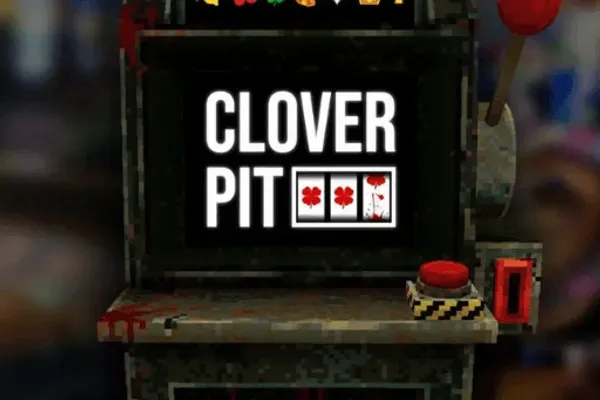
At first glance, CloverPit appears to be a straightforward, perhaps overly simple, digital slot machine. You press a button, watch the reels spin, and hope the RNG (Random Number Generation) favors you. However, dismissing CloverPit as a simple game of chance is a massive mistake. CloverPit is actually a deep, mathematical roguelike disguised as a casual casino game. Every single spin you make in CloverPit involves a complex series of calculations, synergistic choices, and the immense psychological pressure of trying to survive just one more round. It strips away the flashy lights of modern gambling games and places you in a stark, isolated environment where the only things that matter are the numbers on the board and your ability to manipulate them.
The brilliant hook of CloverPit is that you are not just a passive observer waiting for luck. You are actively building your own luck. As you progress through the rounds, CloverPit allows you to fundamentally alter the rules of the slot machine. You can remove weak symbols, duplicate strong ones, and introduce game-breaking modifiers that multiply your score exponentially. The feeling of carefully constructing a deck of symbols over twenty minutes, only to watch it perfectly execute a million-point combo on a single spin, provides an unmatched dopamine hit. But CloverPit is also completely unforgiving; one mathematically incorrect choice during the drafting phase can easily ruin a promising run.
Unlike traditional casino games designed to drain your wallet, CloverPit respects the player's intelligence. It gives you all the statistical information you need upfront. You can see the exact drop rates, the multiplier scales, and the upcoming deadlines. This transparency transforms the game from a slot simulator into a pure puzzle of optimization in CloverPit. You must constantly weigh the immediate benefit of a quick coin payout against the long-term potential of a synergistic combo that takes several rounds to fully mature. This delicate balancing act is the true heart of CloverPit, ensuring that no two playthroughs ever feel identical.
Mastering the Core Mechanics of CloverPit
To consistently win at CloverPit, you must deeply understand the relationship between your base symbols, your modifiers, and the ever-looming deadlines. The game is broken down into specific milestones. Before each milestone, you have a set number of spins to generate a required amount of coins. If you fail to meet the coin requirement by the deadline in CloverPit, your run instantly ends.
Symbol Synergy and Modifiers
The foundation of your strategy in CloverPit lies in how you combine symbols like the Cherry, Diamond, Clover, and Bell. On their own, these symbols provide a flat coin value. However, the true power comes from modifiers. A modifier like "Repetition" will trigger a symbol multiple times, while "Chain" will link adjacent symbols to share multipliers. If you successfully surround a high-value Diamond with Battery modifiers in CloverPit, you can turn a mediocre spin into a massive point explosion. Recognizing which modifiers synergize with your current board state is the most critical skill to learn.
The Power of Lucky Charms
Between rounds, CloverPit offers you the chance to acquire Lucky Charms. These are passive items that permanently alter the rules of your run. Some charms might double the value of all Cherry symbols, while others might guarantee that at least one Clover appears on every spin. Choosing the right Lucky Charm is often the difference between a successful run and a swift defeat in CloverPit. You must build a cohesive strategy; picking random, unrelated charms will dilute your synergy and leave you unable to meet the brutal late-game deadlines. Furthermore, the game will occasionally present you with cursed charms in CloverPit, which offer massive stat boosts but severely penalize specific symbol types, forcing you to radically alter your entire deck-building approach on the fly.
Advanced Strategies and The 666 Pattern
As you push deeper into the late game, the required coin totals skyrocket. You can no longer rely on safe, consistent spins to carry you through CloverPit. You must embrace risk and start building toward specific, high-risk payout patterns.
- The Save System: CloverPit features a highly strategic item-saving mechanic. You do not have to use every modifier or charm the moment you get it. Saving a powerful multiplier for a desperate spin near a deadline is a clutch tactic that veteran players use to survive the most difficult milestones. Master the save system, and you will find your survival rate drastically improving in CloverPit.
- The 666 Pattern: This is the ultimate high-risk, high-reward mechanic hidden within CloverPit. By deliberately assembling a specific, dangerous combination of symbols, you can trigger the 666 Pattern. This can instantly generate millions of coins, obliterating the deadline, but it also carries severe penalties if executed incorrectly, potentially destroying your entire board setup. Learning when it is safe to attempt the 666 pattern is what separates the novices from the absolute masters of CloverPit.
- Resource Sacrifices: After certain deadlines, CloverPit will tempt you with massive rewards, such as a permanent 2x global multiplier. However, accepting these rewards usually requires a severe sacrifice, like losing your most upgraded symbol or reducing your total spins per round. Knowing when to be greedy and when to play it safe is essential.
The beauty of CloverPit is that every single run feels distinct. You cannot force a specific build every time you play, because the charms and symbols offered to you are randomized. You must adapt on the fly. If the game hands you a series of Bell-related buffs early on, you must pivot your entire strategy to accommodate that RNG, even if you prefer playing with Diamond synergies. This constant need for adaptation is what makes CloverPit so incredibly replayable.
The Mathematics of cloverpit
If you want to reach the final deadlines in CloverPit, you must stop viewing the symbols as mere pictures and start viewing them as mathematical variables. The game operates heavily on order of operations. When a spin concludes, CloverPit calculates multipliers from left to right, top to bottom. Placing a massive multiplier on the top left of the board will apply to nothing if it triggers before your base coin values are calculated. Therefore, board positioning is arguably the most complex hidden mechanic in CloverPit. You must carefully maneuver your Battery and Chain modifiers to trigger at the exact end of a sequence, ensuring they multiply the largest possible sum rather than the base value of a single symbol.
Additionally, managing your economy between rounds is crucial. The cost to add or remove symbols from your board scales exponentially. Many new players fall into the trap of spending all their coins immediately to buy minor upgrades. However, veteran CloverPit players understand the value of hoarding wealth. Maintaining a high coin balance allows you to aggressively reroll the shop during the critical mid-game transition, securing the exact Lucky Charms necessary to complete your specific synergy build. It is a constant tug-of-war between short-term survival and long-term optimization in CloverPit.
The Final Verdict on the Slot Roguelike
CloverPit is a dangerously addictive experience. It strips away all the unnecessary fluff of modern gaming and distills the roguelike genre down to pure, unfiltered mathematical decision-making. The high of watching a carefully planned combo detonate across the screen is phenomenal. If you enjoy games like Balatro or Slay the Spire, where synergy and deck-building are paramount, you will easily lose dozens of hours trying to conquer the brutal deadlines of CloverPit.